
When I ran for Fort Lauderdale City Commission in 2022, I recall my campaign advisors calling this time of year “silly season”. Silly rumors, silly ads, silly claims, silly rumors, pretty much most of it seemed silly given how serious of a position I was running for. I think the name of this publication “Keeping it Reel” becomes extra appropriate, especially once we get around silly season with just a little more than two months before election day. It’s important to follow the data, read the numbers, and quantify scenarios as opposed to letting our own beliefs and emotions cloud hard data. It’s my job to take emotion out of this business and use the data I have available to make appropriate decisions for my clients.
Policy can make big impacts on certain people, industries, and businesses, but also may not be as clear cut in how the market performs based on any given outcome. I will provide some context about market performance based on election scenarios below.
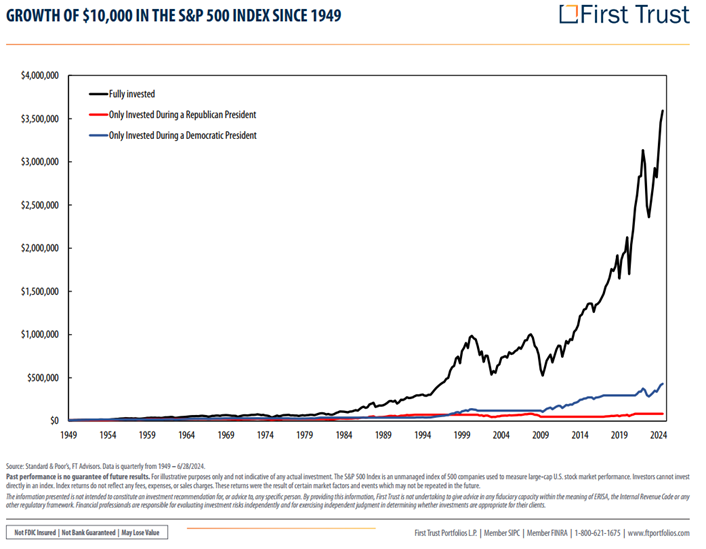
In general, investing specifically for one outcome or another is a fool’s errand. Generally, the economy and markets do just fine when you evaluate performance over the long term no matter what party is in office, as evidenced by the chart below. It’s important we don’t let elections distract us from staying on track and investing in quality businesses.
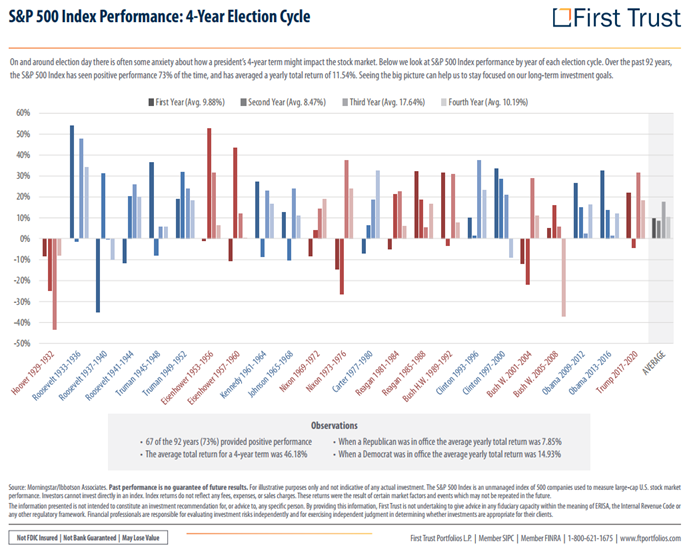
When we look at the SP500 performance over a 4-year election cycle, 73% of the time the market provided positive performance. The average total return during a given term with all terms being calculated is 46.18%.
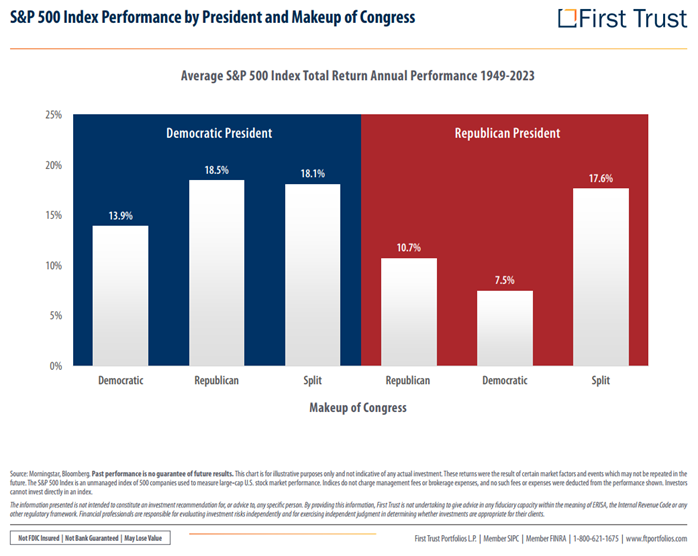
In general, many would be surprised to find out that a split Congress in either presidential scenario yields better returns than a full sweep of the White House and Congress by any given party.
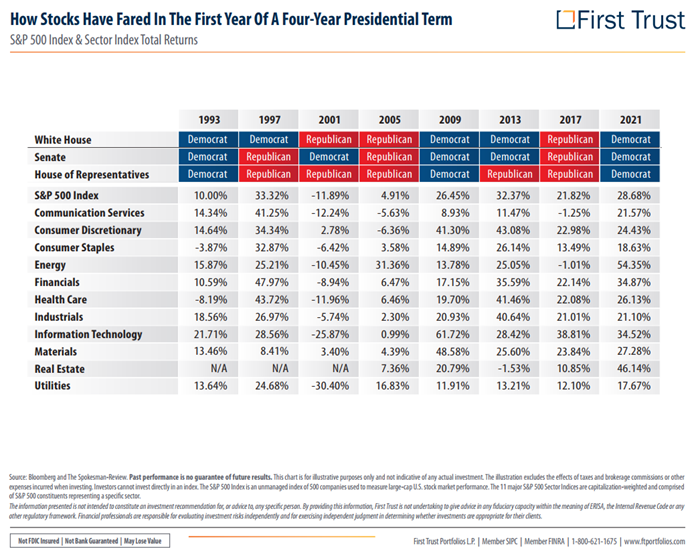
Generally, stocks have had excellent performance in the first year of a presidential term. Only 1 of 8 of the last elections has the market finished lower that year, and that was the tail end of the Tech Bubble Burst.
The most important thing we must pay attention to after the election is the rate at which the economy slows and what affect that has on jobs and other data points that influence the financials for the businesses that we invest in. In a soft landing scenario, the Fed is able to slow the economy enough without pulling it into a recession, while normalizing monetary policy and allowing the economy to expand while inflation remains tame. In a hard landing scenario, the Fed typically hikes the economy into a recession and is not forward thinking or quick enough to adjust monetary policy to avoid this. Historically, the latter is more probable but the former is not impossible. I think remaining invested with extra caution going into and through 2025 is prudent, as well as being prudent in making adjustments as warranted.
As always, thank you for reading and I hope this has been helpful in Keeping it Reel when it comes to the markets and elections.
Mike Lambrechts
Managing Partner
KL Wealth Advisors
0 Comments